When the emcee read out “BusyBee,” five first- and second-year founders from the University of Utah Asia Campus looked at each other in disbelief—and then grinned. Three months of late nights and dozens of design iterations had just paid off with an Excellence Award at one of Incheon’s most competitive student startup events.
“We weren’t the most technical team—but we were the most together,” says BusyBee CEO Gahyun Choi.
From passive maps to a participatory safety network
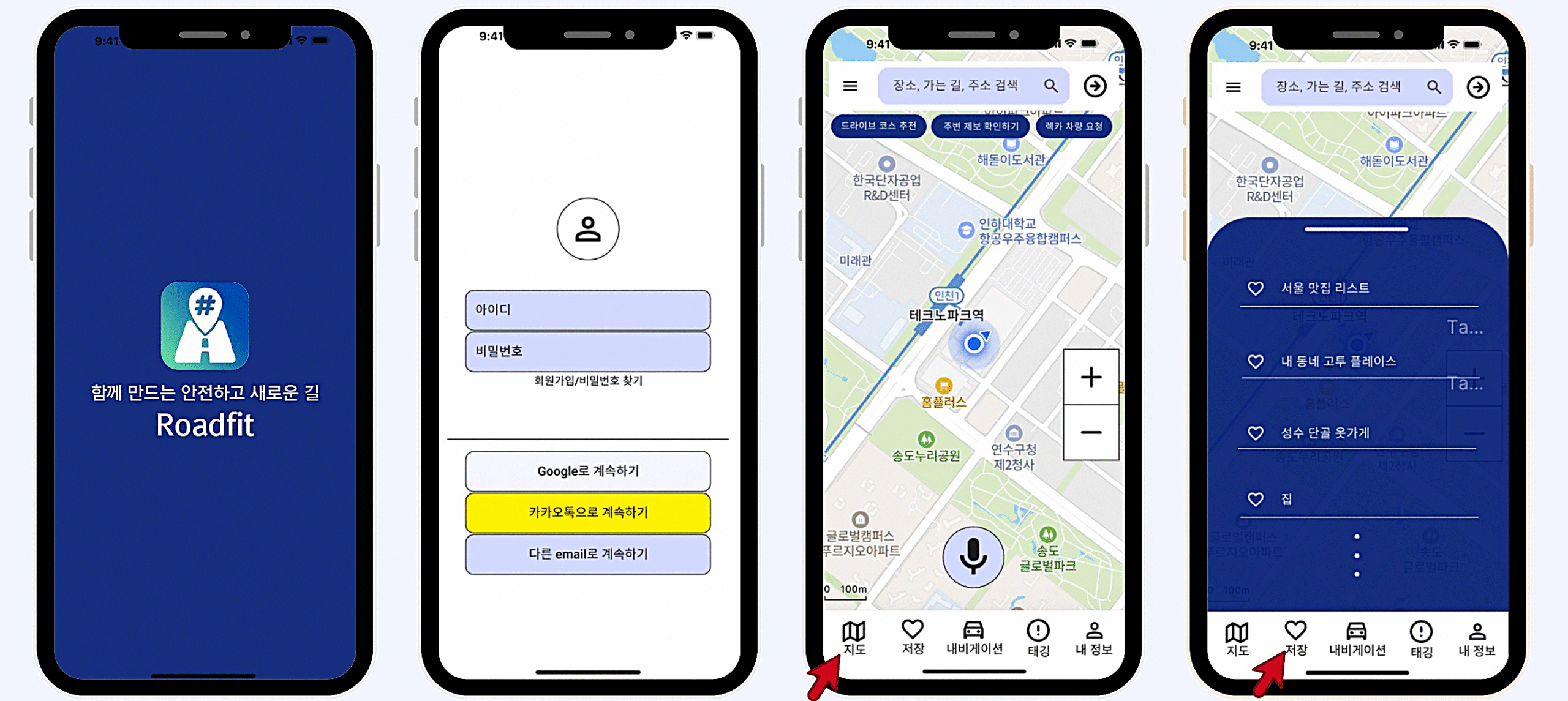
BusyBee started with a simple frustration: navigation apps often optimize for speed even when safety is the real decision point. The team’s response is a two-way layer on top of everyday navigation—think community-verified safety intelligence.
- Safety-first routes: Paths weighted by a dynamic “safety score,” not just distance or time.
- Real-time risk alerts: Hyperlocal signals for things like sudden closures, repeat-incident zones or CCTV outages.
- Community credits: Users contribute verified safety info and earn rewards—building a culture where everyone helps everyone get home safely.
“Ultimately, we want to deliver peace of mind,” says CTO Jaeseok Yi. “Confidence to choose a route that feels safe—because your community helped confirm it.”
The rhythm behind “BusyBee”
The name isn’t just cute. “We’re busy people with big goals,” says Choi, who led the on-stage pitch while her teammates formed a live Q&A wall beside her. Judges noticed.
“Teamwork was our edge,” adds CFO Geonho Bae. “All five of us took the stage, and each person owned a part of the problem.”
The five founders met through the Utah Asia Campus startup club and split responsibilities early:
- CEO: Gahyun Choi (information systems and strategic communication minor): product strategy, lead presenter
- CFO: Geonho Bae (accounting): revenue modeling, API cost curves, financial plan
- COO: Sanghoon Nam (accounting): operations flow, go-to-market realism
- CTO: Jaeseok Yi (information systems): systems thinking, data/security approach
- CDO: Jiyeon (Anne) Lee (information systems): UX and service design
“There’s no perfect team—only teams that fix their weaknesses together,” says COO Sanghoon Nam.
Learning to build for the real world
Most of BusyBee’s members are first- or second-year business majors—none major in Computer Science—so technical implementation loomed large. Rather than stop there, they reached outward, meeting with developers and planners at NAVER, one of Korea’s largest tech companies and a major global internet platform known for its AI, maps and mobility services.
“We knew feasibility would be the judges’ pressure point,” says Bae. “We modeled API usage costs, explored premium- versus low-cost subscription options and mapped how user participation could offset expenses while growing trust.”
For Jiyeon (Anne) Lee, design became the bridge between imagination and execution. “We didn’t have the resources to build a full prototype,” she says. “So our UX had to feel real—something that makes people think, ‘I’d use this tomorrow.’”
“Mentor feedback matters—but the courage to absorb it matters more,” says COO Sanghoon Nam.
Faculty behind the hive
The team also credits much of its success to the faculty mentors at the David Eccles School of Business, University of Utah Asia Campus.
Professor Sunghee Kim (accounting) in particular became the team’s “guiding force.” A former entrepreneur himself, he offered practical feedback on everything from presentation flow and body language to delivery style—the kind of coaching that helps transform good ideas into winning pitches.
“Professor Kim taught us how to present with clarity and confidence,” says Geonho Bae. “We were the only team to include a full financial statement slide, thanks to his guidance. It set our presentation apart.”
The students expressed deep gratitude to all their professors for their encouragement and support throughout the competition, emphasizing that the culture of close mentorship and genuine care at the Utah Asia Campus made their success possible.
The moment, and the mindset
Waiting for their slot in the final program, the team huddled. “We told each other: we’ve done the work, let’s show what we built,” says Yi.
When “BusyBee” hit the screen, Choi felt everything click. “It wasn’t just a trophy. It was proof that teamwork beats perfect.”
Why it matters to Utah
Entrepreneurship is a throughline at the U. The David Eccles School of Business is known for teaching students to design for people—not just for pitch decks. At the Utah Asia Campus in Incheon’s global education hub, that ethos is crossing borders and time zones.
“We want our students to build useful things—and grow as collaborators along the way,” say Professors Byoung-gyu Gong and Hak-Yoon Kim of the David Eccles School of Business at the University of Utah Asia Campus. “That’s Utah.”
What’s next
BusyBee will keep refining feasibility (privacy, security, operational costs) and take the concept into more programs—including DMC Innovation Camp 2025. The plan: more mentorship, sharper prototypes and user testing that proves the safety value.
“Don’t wait for perfect. Start, learn and keep moving,” says the team leader, Gahyun Choi.