Header image: The Repellent Fence (2015) is a landscape-scale artwork by Postcommodity, an Indigenous art collective. The piece demonstrates the tenants of Native punk; direct, humorous and confrontational. The artists strung 26 giant balloons across the U.S. southern border, based on a real product meant to scare birds away from fruit trees—but they only work for a couple of days.
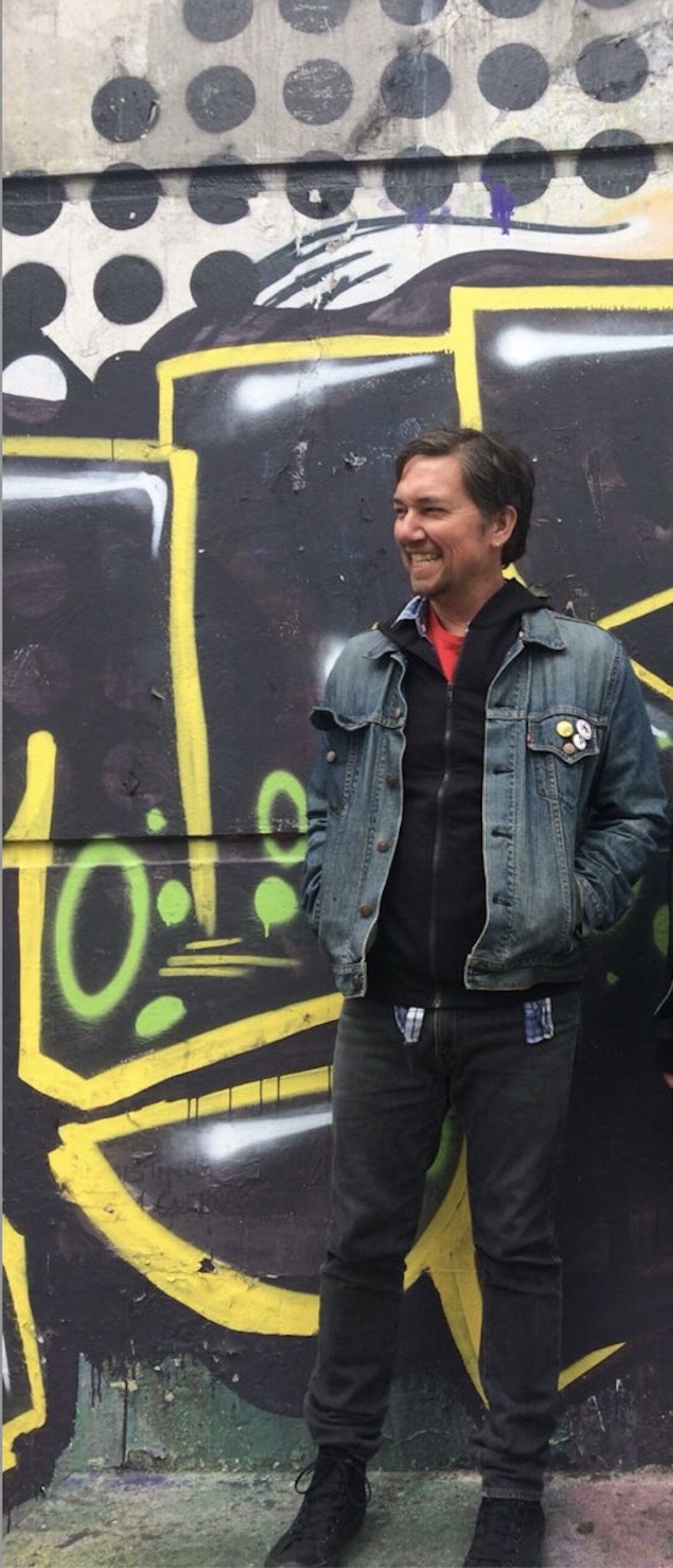
Thomas Swensen found punk by accident. He grew up in Kodiak, Alaska in the late 70s and early 80s, enrolled in the federally recognized Tangirnaq Native village. It was the height of the region’s fishing industry, and the remote Kodiak port was a popular site for contraband to enter the country. Before he was a teenager one of his parents brought home a box of old records she received as partial payment for illicit substances. It was full of edgy vinyl of the day, including a Ramones album called Rocket to Russia. For a lonely kid at the edge of the world, The Ramones was the gateway to a lifelong membership in the global punk community.
Now an assistant professor in the Department of Ethnic, Gender and Disability Studies, Swensen’s historical research centers Native people. Using zines, songs, flyers, and art installations, his upcoming book “Where Next, Columbus?” follows hardcore, thrash, metal, and pop punk through Indigenous America, from his roots in Alaska to Mexico City at a punk market atop the ruins of Tenochtitlan.
What is punk, and how does it intersect with Indigenous culture?
This question is a wonderful can of worms, since punk is so individual to people and it’s hard to get anyone to agree. For me, punk isn’t just about music. Back in the 80s, the founder of the zine MaximumRockandrollallegedly said that punk is about being independent from governments and corporations. I explore that idea through an Indigenous lens. Native Americans are the only group mentioned by name in the U.S. Constitution. That’s a strange visibility; it acknowledges a kind of sovereignty, but only in the sense of how Congress manages the relations with tribal governments. Native punk takes that tension and messes with it. It redefines sovereignty, not as recognition, but as a creative independence—making your own sound, your own art, your own story without asking permission. It’s a sovereignty as a kind of punk self-determination. It’s loud, it’s messy and it uses humor to critique the status quo. I see these same qualities in Native communities.
Why did you title your book, “Where Next, Columbus?”
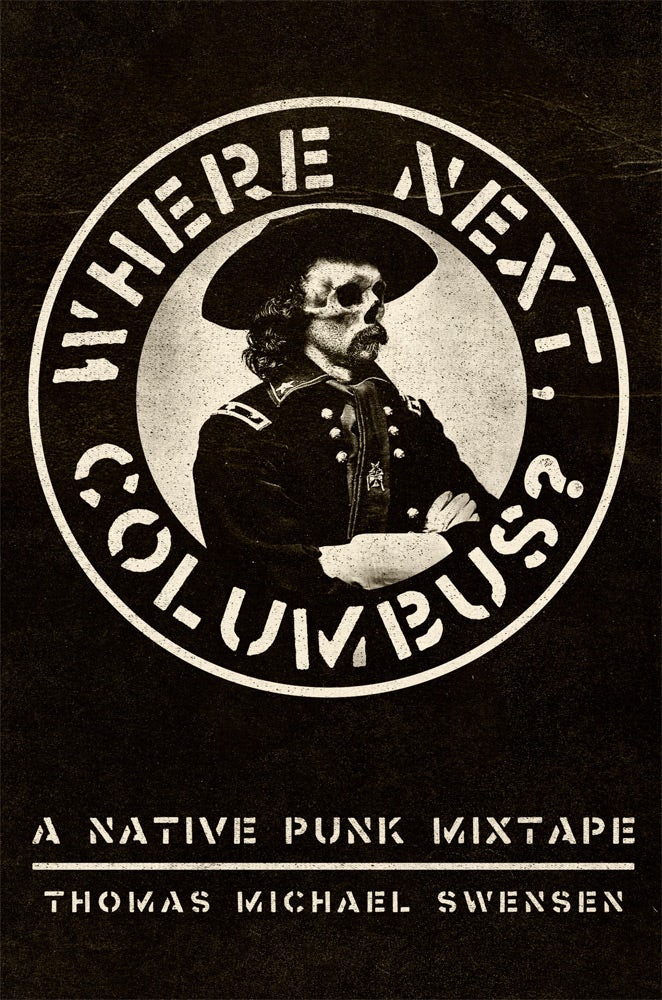
The title is a song from the band Crass, an anarchist punk group from the 70s and 80s. It’s a song that critiques charismatic leaders who sell progress as salvation—Columbus, Mussolini, and Marx. All of a sudden, you’re caught up in another person’s definition of right and another person’s version of left instead of thinking for yourself.
So, what comes after conquest? I don’t think it’s erasure, or vanishing. It’s something closer to accountability. A reckoning. The book is about punk and Native cultural sovereignty, not as opposites in contrast to one another, but as ways to remap the Americas in a way that feels alive with historic and creative energy.
One can’t ask “Where next, Columbus?” without thinking about the term progress. Progress, the way we’re taught to understand it, always leaves someone behind. Growing up in a remote place that was hit hard by the Exxon Valdez Oil Spill, it made an impression on me. Punk made sense of that for me. When I was a teenager, my mom was incarcerated, and I had to live on my own. So punk wasn’t just rebellion for rebellion’s sake. It was a friend I listened to through a pair of cheap earphones. It was the only thing loud enough to talk over the stuff going on in my head back then.
My work with this book shows that the Native Punk Americas is an incredible place. Rough around the edges but filled with beauty and contradiction. So, “Where next, Columbus?”
Well, we’re already here—press play… Yeah, it’s heavy. but it’s a lot of fun. That’s what I love about it.
When did punk first pop up in Native America?
1969 is really key. Vine Deloria, Standing Rock Lakota, published Custer Died for Your Sins: An Indian Manifesto, and musician, Floyd Red Crow Westman, also Lakota, released an album of the same name. Both mixed humor in ways that punk would claim later. Deloria wrote about what he called “Indian Experts,” critiquing some Native people who advocated for solutions and policies on behalf of all Native communities. He kind of gets at the idea of the poser, but it is all in good fun. I mean, his writings are rich with humor.
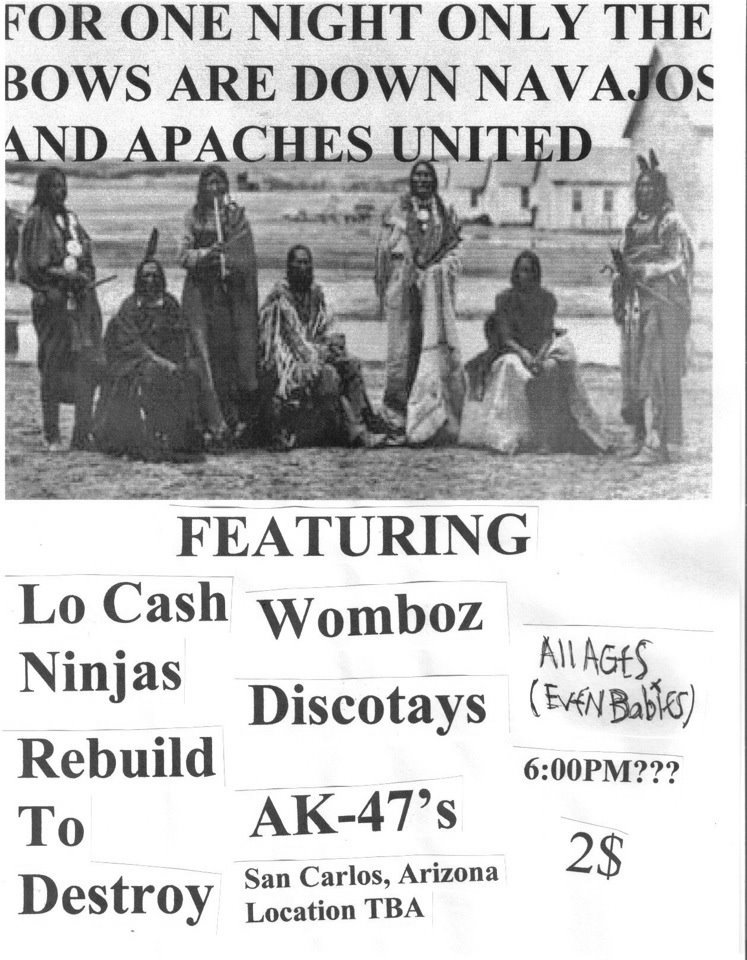
There’s this idea that punks are rebellious, progressive people, and…sure…but there’s also a wonderful stodginess to punk that’s really fun to explore. For many people, there’s one real punk, and then they say that all the other stuff, the other punk—pop-punk, queer core—they categorize as something else. For my work, I think of punk in broad terms without putting up fences about what is and what ain’t.
This book is dedicated to my son. Being a father means I have to listen to Green Day, which is no small feat for me. It was a real stretch into maturity for me to say, ‘Okay, let’s listen to American Idiot.’ We saw them play recently and he just loves it. Watching him and 40,000 other people jump around knowing every word, it helped me grow up a little bit. I know how that sounds—I grew up thinking that not even The Clash were punk. I was too cool for them. It taught me a lot about seeing the joy that the band brings people. That critique and joy is what shaped the book.
What’s are some examples you highlight in the book?
The book starts with me growing up in the 80s as a teenager in the Alaska punk scene. There was band called Clyng-Onz, and they had an offensive song called Shootin’ Winnebagos. That’s kind of a double entendre—Winnebagos represent tourists, but Winnebago, also known as the Ho-Chunk, are a Native American people with two federally recognized tribal nations, the Winnebago Tribe of Nebraska and the Ho-Chunk Nation of Wisconsin. That’s totally frontier mentality. In the book, I tell the story through old Alaskan punk zines. Eventually, I end the book at El Chopo, a punk market on top of Tenochtitlan that started in 1980s—it’s still going, and now it’s even a national heritage site. Think of it like a record fair, fashion show, street art, a place where you can get zines, bootleg shirts, and see concerts happening all around it. It’s a punk market that’s literally on top of an empire. And so, at the end of the book, I’m sitting on this culture and history and this everyday creativity that mixes punk culture with Native culture.
Find more information about “Where Next, Columbus?” here.
MEDIA & PR CONTACTS
-
Lisa Potter
Research communications specialist, University of Utah Communications
949-533-7899 lisa.potter@utah.edu