When emergencies happen on the University of Utah campus, everyone is eager for more details. Fire alarms may be activating in student housing, police and emergency vehicles are appearing around campus or TV news cameras are present.
Students, in particular, often turn first to their phones to find out what’s going on. Anonymous social media platforms such as Yik Yak can quickly fill with speculation, screenshots, AI misinformation and alarming claims. Too often, those posts are treated as fact.
That reflex carries real consequences for students and the broader campus community.
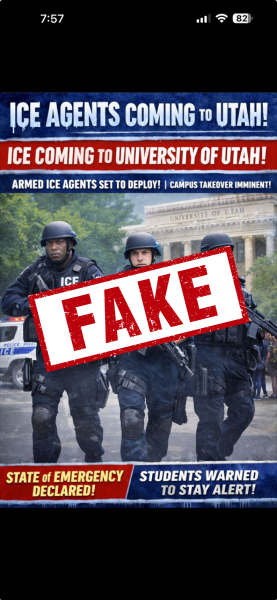 According to Ben Lyons, associate professor in the Department of Communication and expert in misinformation, research shows that “people actively seek any information to reduce uncertainty. Under stress or time constraints, we tend to rely especially on information feeling intuitively correct rather than deliberately evaluating claims and evidence. These tendencies help rumors spread when information is limited.”
Yik Yak’s anonymity and location-based design can make it feel like a trusted, insider source. In reality, it’s a rumor mill with no built-in verification. During police activity such as a medical call, a routine investigation or an emergency, social media posts can rapidly escalate from vague observations to exaggerated or entirely false narratives about active threats.
The harm is immediate. Unverified claims can spread panic, prompting members of the campus community to shelter unnecessarily or overwhelm emergency lines with calls seeking confirmation. Fear travels faster than facts, particularly when posts are framed as urgent warnings from unnamed peers.
“Social platforms are optimized for engagement. Content that is shocking or emotionally charged spreads faster than plain language, fact-based updates,” Lyons said. “Social media also collapses traditional information hierarchies. Official sources have to compete side-by-side with rumors and unverified accounts.”
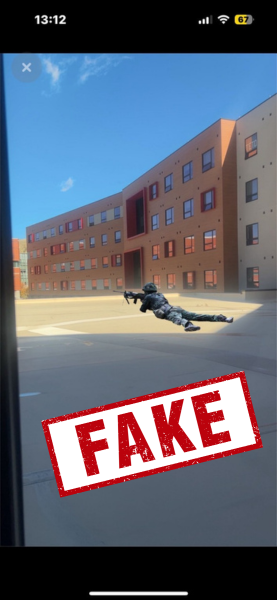 Misinformation also complicates the work of law enforcement and campus safety officials. Police responding to an incident must manage not only the situation at hand, but also a parallel crisis online. False reports can divert resources, interfere with investigations and undermine official efforts to communicate accurate information in real time.
There is a longer-term cost as well. When those on campus repeatedly encounter exaggerated or false claims, trust erodes in institutional communication. Some may begin to discount official alerts as incomplete or delayed, while others may assume the worst whenever police are visible, regardless of the circumstances.
Additionally, rumors about police activity may fuel anxiety among students who already feel vulnerable or targeted, intensifying stress and fear even when no threat exists.
None of this means students, their parents, staff or faculty should ignore social media entirely. Platforms can serve as spaces to share concerns and ask questions. The problem arises when anonymous posts are treated as authoritative sources, especially in moments of uncertainty.
Trusted sources
Campus officials consistently advise students to rely on verified channels such as emergency alerts, official social media accounts and campus police updates for accurate information. Those sources are accountable, time-stamped and grounded in confirmed facts, even when details are still limited.
“The University of Utah Police Department and the Department of Public Safety are committed to communicating early and regularly so we can help prevent information vacuums that misinformation fills,” said Keith Squires, the U’s chief safety officer. “It’s also important that we continue to build trust with the campus community before crises occur.”
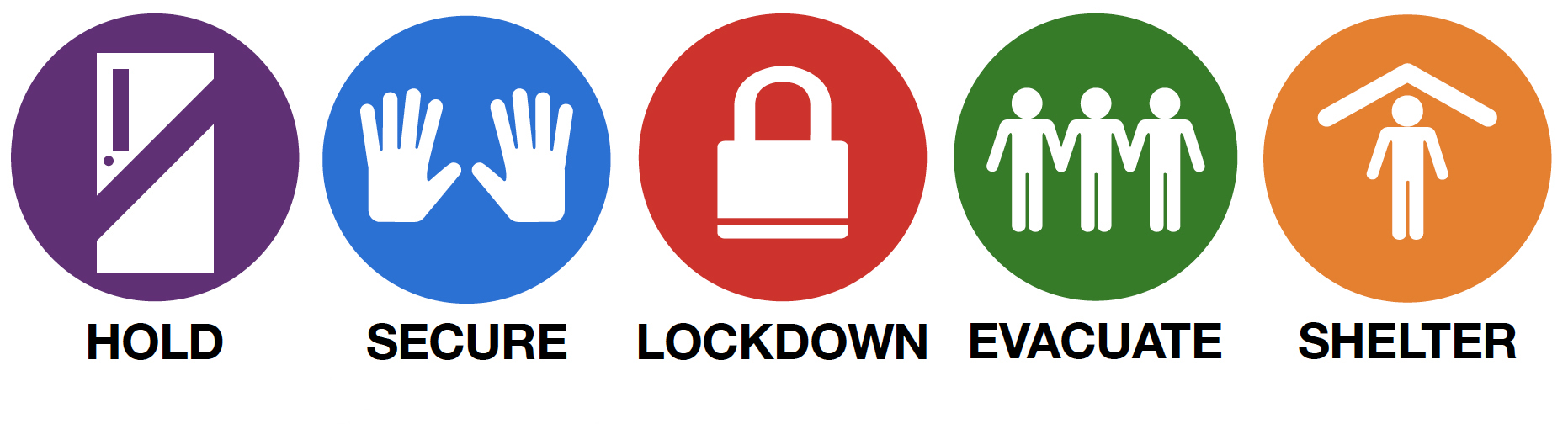 This is one of the reasons the U has adopted the Standard Response Protocol (SRP) and updated its emergency alerts to ensure more people receive critical safety information faster. The changes are designed to support active threat response programs and aim to help U students, faculty and staff take action more quickly during emergencies.
New training advises members of the campus community to “Avoid, Deny, Defend” and campus alerts now reflect that language. For most types of hazards, the U will ask students, staff and faculty to take one of the actions outlined in the SRP.
How to stay informed
The Department of Public Safety asks that students, faculty and staff visit the new campus alert registration page in CIS where they can provide up to three SMS numbers. Cellphone numbers for yourself and that of a parent, guardian or significant other can be added in the other available fields. This ensures that in an emergency, loved ones are also kept up-to-date on the latest information.
The campus community can also play a role in helping slow the spread of misinformation. Before reposting or reacting to alarming claims, basic questions matter: Who is the source? Is the information confirmed? Does it match what officials are reporting? If the answer is unclear, sharing it may do more harm than good.
Police presence on campus is not, by itself, evidence of danger. Treating every sighting as a crisis, fueled by anonymous speculation, creates an environment of constant fear.
In moments that demand calm, clarity and at times action, believing everything posted on social media can be harmful.
Responsible information-sharing is a collective obligation to the safety and well-being of the U campus.